Gas Fireplace Service Before Fall in Northern Virginia
Is Your Gas Fireplace Ready for Cooler Weather?
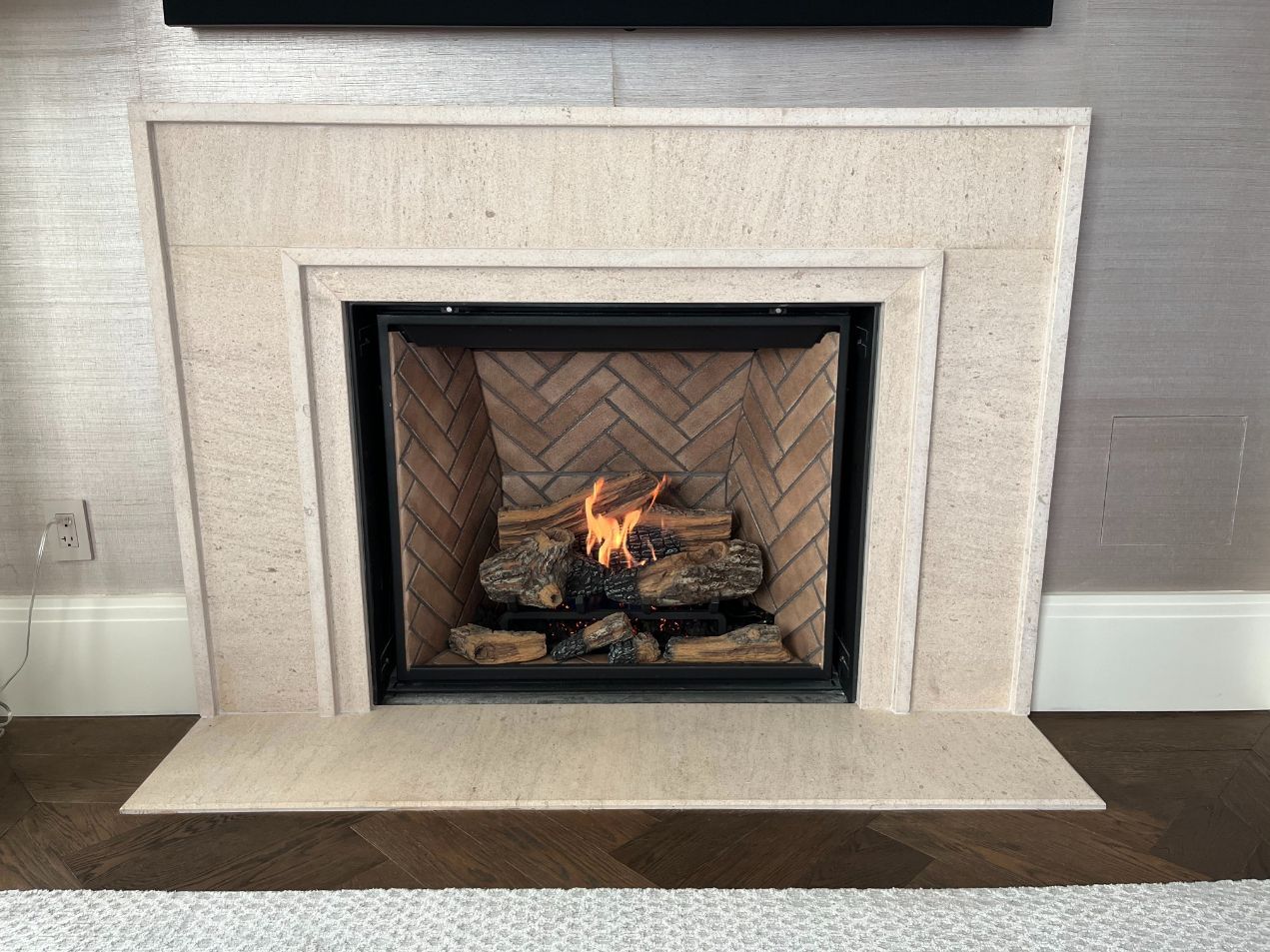
Early fall is an ideal time to schedule gas fireplace service in Northern Virginia. After sitting unused for much of the spring and summer, a gas fireplace may have accumulated dust and debris, developed ignition problems, or simply need inspection and cleaning before regular use begins.
Waiting until the first cold evening to discover that your fireplace will not light can mean competing with many other homeowners for service at exactly the same time.
Professional gas fireplace maintenance can help identify problems early, clean important components, verify proper operation, and make sure your fireplace is ready when temperatures begin to fall.
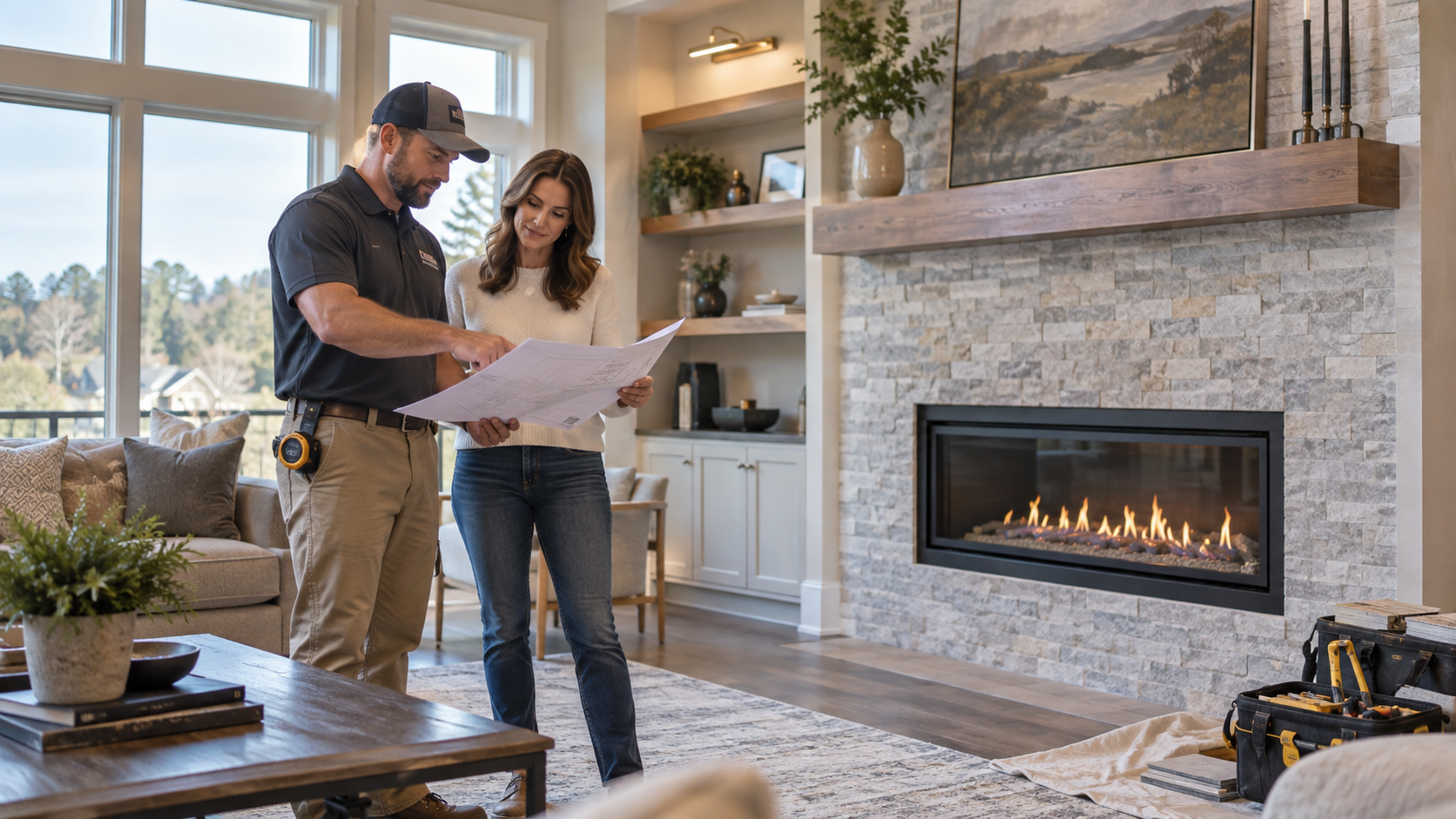
NOVA Gas Works provides professional gas fireplace service, inspection, maintenance, troubleshooting, and repair throughout Northern Virginia. Whether your fireplace has stopped working or you simply want it checked before heating season, September is a smart time to schedule service.
Do Gas Fireplaces Need to Be Serviced?
Yes. Although gas fireplaces generally require less day-to-day maintenance than wood-burning fireplaces, they are still fuel-burning appliances with components that need periodic inspection and service.
A gas fireplace may contain:
- Pilot assemblies
- Ignition components
- Burners
- Gas valves
- Thermocouples or thermopiles
- Flame sensors
- Venting components
- Electrical controls
- Remote receivers
- Blowers
- Gas connections
Dust, pet hair, debris, normal wear, and long periods of inactivity can affect how these components operate.
Many gas fireplace manufacturers recommend professional inspection and maintenance on an annual basis. Homeowners should also follow the service recommendations provided for their specific fireplace model.
Why Is Fall a Good Time for Gas Fireplace Service?
September is a natural transition between air-conditioning season and regular fireplace use.
Scheduling service before colder weather arrives gives you time to address problems before the fireplace becomes part of your daily routine.
Fall fireplace service can help:
- Confirm that the fireplace ignites properly
- Identify worn ignition components
- Clean accumulated dust and debris
- Check burner operation
- Inspect accessible gas connections
- Verify controls and switches
- Identify repairs before peak heating season
- Reduce the chance of discovering a problem on the first cold night
It also gives homeowners more time to address repairs if a replacement component or additional work is needed.
What Happens During Gas Fireplace Service?
The exact service procedure depends on the fireplace manufacturer, model, age, and condition, but a professional inspection generally focuses on the components responsible for safe ignition, combustion, fuel delivery, and operation.
Service may include:
Inspecting the Burner
Dust, debris, and other buildup can affect flame performance. The burner can be inspected and cleaned as appropriate for the unit.
Checking the Pilot and Ignition System
A fireplace that struggles to light may have an issue involving the pilot assembly, igniter, flame sensor, thermocouple, thermopile, or electronic ignition system.
Inspecting Gas Connections
Accessible fuel connections can be evaluated for proper condition as part of the overall inspection.
Checking the Fireplace Controls
Wall switches, remotes, receivers, batteries, and electronic controls may all affect fireplace operation.
Inspecting Venting
For vented fireplaces, proper venting is an important part of safe performance.
Evaluating Overall Operation
After service, the technician can operate the fireplace and evaluate ignition, flame appearance, controls, and general performance.
The goal is not simply to make the fireplace turn on. It is to understand how the system is operating and identify anything that may require attention.
What Are the Signs a Gas Fireplace Needs Service?
Some gas fireplace problems are obvious. Others develop gradually.
Schedule professional service if you notice:
- The fireplace will not ignite
- The pilot light will not stay lit
- Ignition is delayed
- The burner repeatedly shuts off
- Flames appear weak or inconsistent
- The remote or wall switch stops working
- The fireplace makes unusual clicking or operating noises
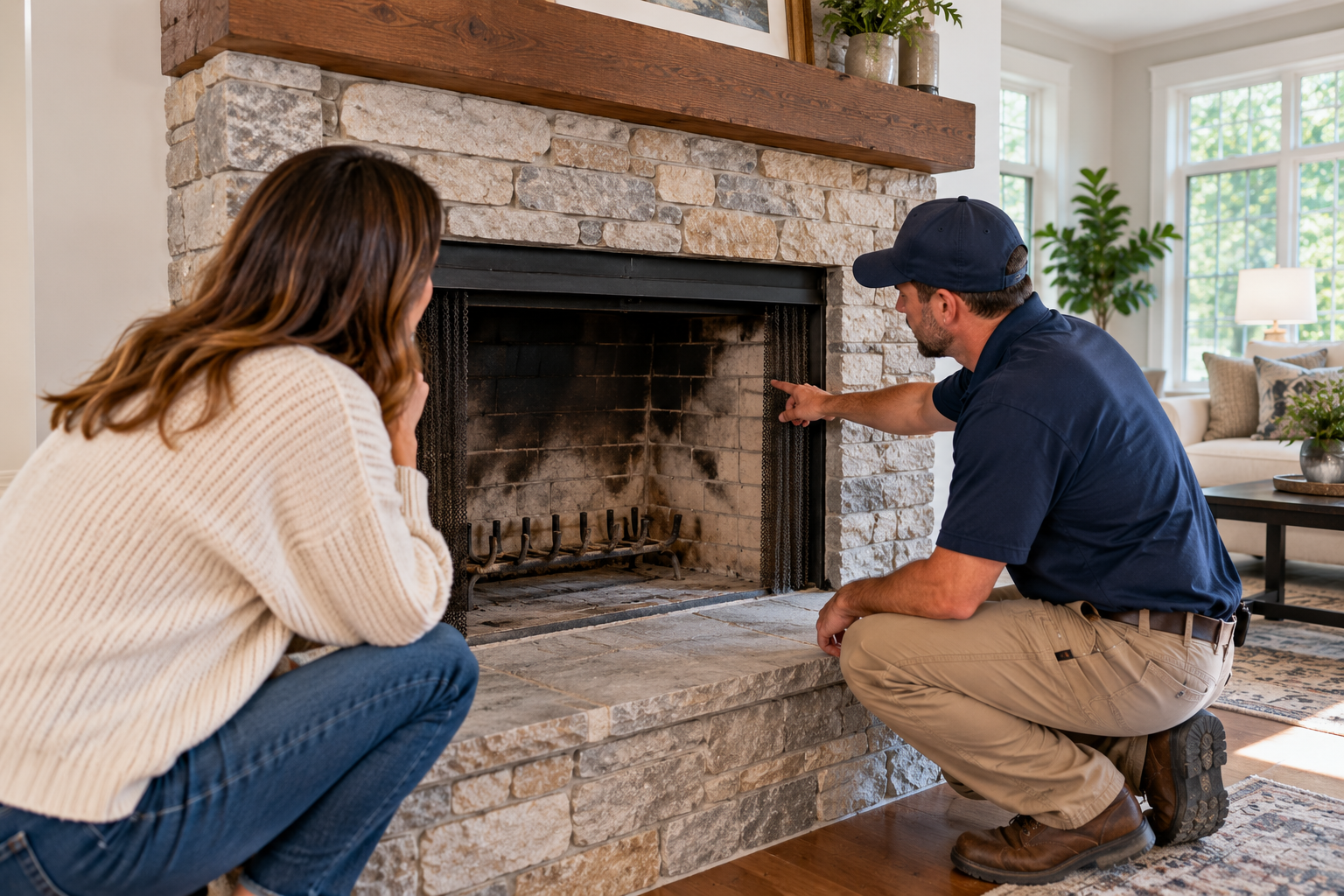
- Soot or unusual buildup appears inside the unit
- The fireplace has not been serviced in a long time
Even if the fireplace appears to be working normally, preventive inspection can uncover wear or buildup before it becomes a larger problem.
How Often Should a Gas Fireplace Be Serviced?
A common recommendation is to have a gas fireplace professionally inspected about once a year, although the appropriate schedule depends on the manufacturer, fireplace type, usage, and condition.
You may want service sooner if:
- The fireplace is used heavily
- It has developed ignition problems
- It has not been operated for an extended period
- You recently purchased a home and do not know its service history
- The fireplace has undergone previous repairs
- You notice changes in flame or performance
Always follow the maintenance recommendations for your specific fireplace model.
Is Gas Fireplace Maintenance Different From Gas Fireplace Repair?
Yes.
Gas fireplace maintenance is preventive. The goal is to inspect, clean, test, and identify developing issues before the appliance fails.
Gas fireplace repair addresses a specific problem.
For example:
Maintenance might involve:
- Routine inspection
- Burner cleaning
- Pilot inspection
- Control testing
- General operational checks
Repair might involve:
- Replacing an ignition component
- Repairing a pilot assembly
- Addressing a failed control
- Replacing a gas valve
- Correcting another identified malfunction
Scheduling routine maintenance does not guarantee that a fireplace will never need repair, but it can help identify problems earlier.
What If You Smell Gas Near Your Fireplace?
A suspected gas leak should be treated differently from routine fireplace service.
If you smell gas or hear what sounds like gas escaping, leave the property immediately and contact your gas utility or emergency authorities from a safe location. Do not operate lights, switches, phones, or other electronics inside the building while leaving.
Do not attempt to locate or repair a suspected active gas leak yourself.
Once the immediate situation has been made safe, a qualified gas professional can inspect the fireplace, gas connection, and related piping as appropriate.
Don't Forget Your Carbon Monoxide Alarms
Gas fireplaces are fuel-burning appliances, which makes functioning carbon monoxide alarms an important part of home safety.
Homeowners should have properly installed carbon monoxide alarms and test them according to the alarm manufacturer's recommendations.
If a carbon monoxide alarm sounds, move outside to fresh air and contact emergency services. Do not continue using a gas fireplace or other suspected fuel-burning appliance until the source has been evaluated and the appliance has been cleared for use.
Why Choose a Master Gasfitter for Fireplace Service?
Gas fireplace service sits at the intersection of appliance repair and fuel-gas expertise.
A technician may encounter a problem with the fireplace itself, its controls, the appliance connection, or the fuel supply.
Working with a Master Gasfitter provides the additional perspective of someone experienced with the larger gas system rather than only the visible fireplace.
That can be especially valuable when troubleshooting unusual problems or determining whether a fireplace issue originates inside the appliance or elsewhere in the gas system.
Gas Fireplace Service Throughout Northern Virginia
As evenings become cooler across Northern Virginia, fireplaces begin returning to regular use.
September is the time to find out whether yours is ready—not the first evening you actually need it.
NOVA Gas Works provides professional gas fireplace service, maintenance, inspection, troubleshooting, and repair throughout Falls Church, Fairfax, Arlington, Alexandria, Vienna, McLean, and surrounding Northern Virginia communities.
Whether your fireplace has not been serviced recently, will not light, has an inconsistent flame, or simply needs a professional inspection before fall, our team can evaluate the system and recommend the appropriate next step.
Contact NOVA Gas Works to schedule gas fireplace service before colder weather arrives.
Frequently Asked Questions
Q: How often should a gas fireplace be serviced?
A: Many manufacturers recommend professional inspection and maintenance approximately once a year, although you should always follow the recommendations for your specific fireplace. Heavy use, operating problems, or an unknown maintenance history may justify earlier service.
Q: Who should service a gas fireplace?
A: Gas fireplaces should be serviced by a qualified professional experienced with gas appliances, ignition systems, fuel supply, gas piping, venting, and applicable safety requirements.
Q: Does a gas fireplace need cleaning every year?
A: Cleaning needs depend on the fireplace and how it is used, but dust and debris can accumulate around burners, pilot assemblies, and the firebox. Periodic professional inspection can determine what cleaning is appropriate.
Q: Why does my gas fireplace click but not light?
A: Clicking without ignition can have several causes, including ignition-system problems, pilot issues, controls, or fuel-supply concerns. Professional diagnosis can identify the actual cause.
Q: Can an old gas fireplace be repaired?
A: Many older fireplaces can be repaired when replacement components remain available and the appliance can be restored to safe operation. A professional inspection can determine whether repair or replacement is the more appropriate choice.
Q: Should I get a second opinion before replacing my gas fireplace?
A: If you have been told a fireplace cannot be repaired, a second evaluation from an experienced gas fireplace professional may be worthwhile before making a major replacement investment.